
-- Use a Common Table Expression (CTE) to combine and clean the language lists
WITH all_languages AS (
  -- First, get, clean, and label all mandatory languages
  SELECT
    CASE
      WHEN LOWER(language_name) IN ('spanish', 'español') THEN 'Spanish'
      ELSE INITCAP(language_name) -- Standardizes capitalization for others (e.g., 'english' -> 'English')
    END AS language,
    'Mandatory' AS requirement_level
  FROM
    job_llm_extractions,
    unnest(mandatory_languages) AS language_name

  UNION ALL

  -- Second, get, clean, and label all preferred languages
  SELECT
    CASE
      WHEN LOWER(language_name) IN ('spanish', 'español') THEN 'Spanish'
      ELSE INITCAP(language_name)
    END AS language,
    'Preferred' AS requirement_level
  FROM
    job_llm_extractions,
    unnest(preferred_languages) AS language_name
)

-- Finally, group, count, and get the top 145 results
SELECT
  language,
  requirement_level,
  COUNT(*) AS number_of_jobs
FROM
  all_languages
WHERE
  language IS NOT NULL -- Exclude any potential nulls that might result from empty arrays
GROUP BY
  language,
  requirement_level
ORDER BY
  number_of_jobs DESC -- Changed: Order by the count to find the highest values
LIMIT 90; -- Added: Limit the output to the top 145 rows
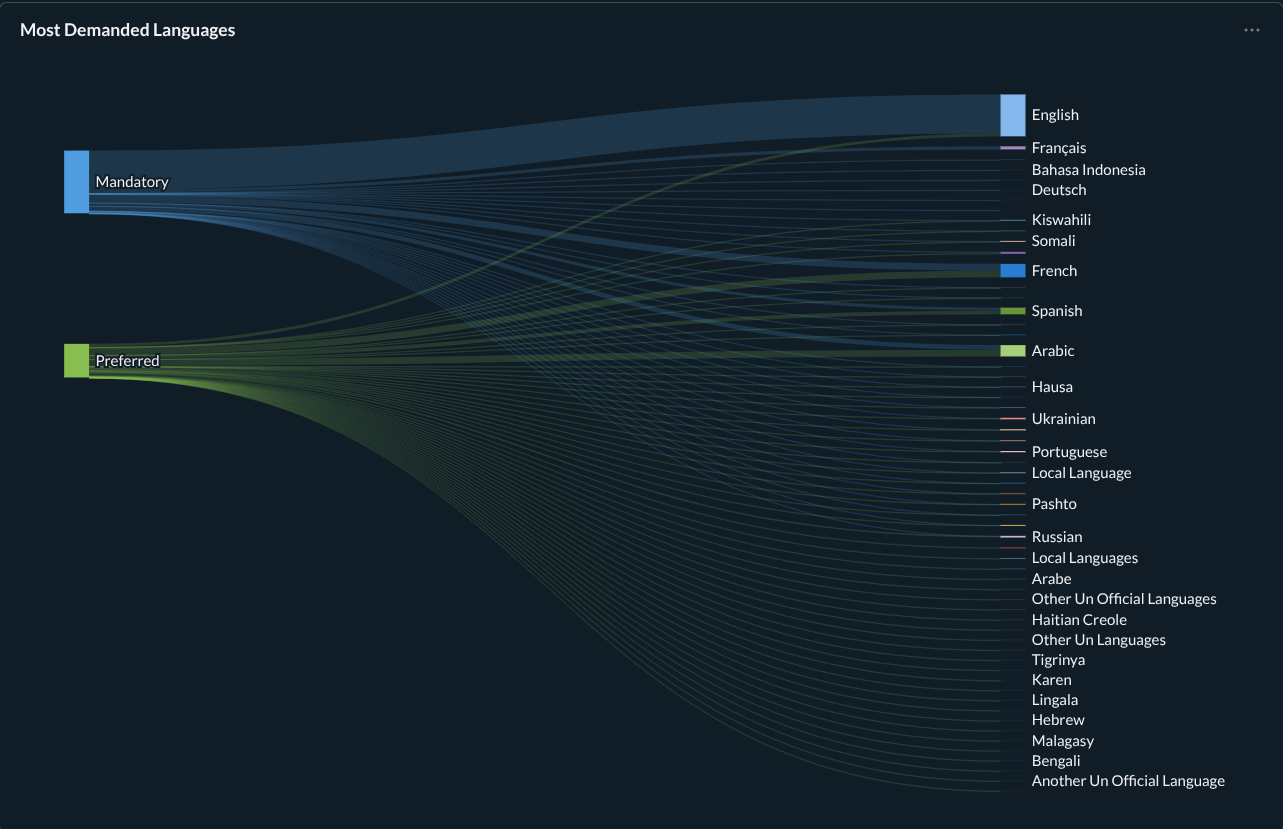
This was the most complicated visualization, and sadly, the worst to see on the mobile phone.
[LLM extraction of new information in Job Descriptions about localization]